Baseboards that feel soft
Push a thumb into the baseboard near the leak. If it gives, water has been in the wall long enough to soak the drywall behind it.
Find the source and stop it, or get your plumber in if the repair is theirs.
Extract standing water and pull up padding and wet materials that will not dry.
Map the moisture with meters and a thermal camera so nothing wet stays hidden behind a wall.
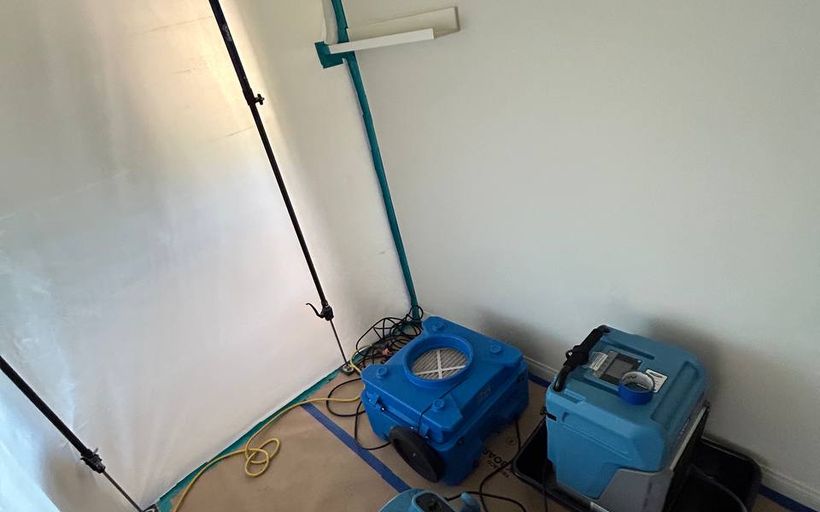
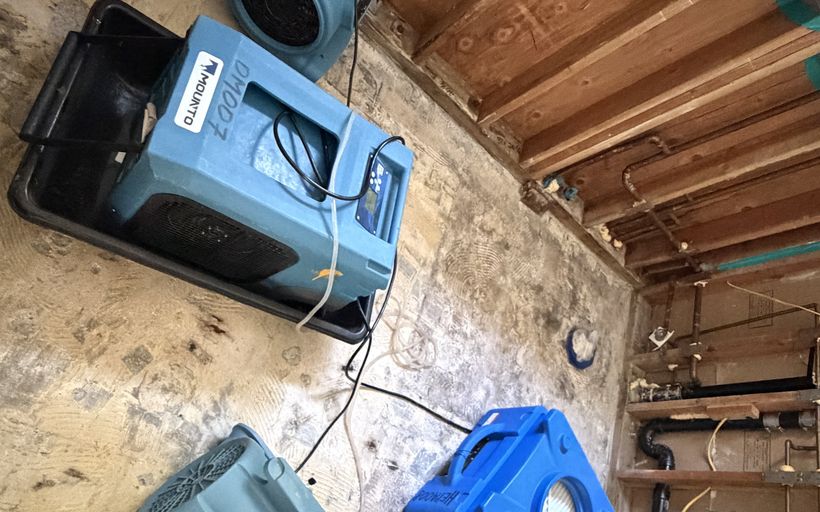
Set air movers and dehumidifiers sized for the space, and log readings every day.
Take the equipment out when the readings say dry, then rebuild what came out.
Push a thumb into the baseboard near the leak. If it gives, water has been in the wall long enough to soak the drywall behind it.
Wood swelling at the seams means the moisture came up from underneath, not from a spill you wiped up.
A ring on the ceiling that is bigger this week than last means water is still getting in somewhere above it.
Smell is the first sign of growth, and it shows up before anything is visible on the surface.
The category decides what can be dried and saved, and what has to come out. It is also what the carrier looks at first.
A supply line, a water heater, rain through a window. Most materials can be dried in place if we get there before it degrades — which happens in about 24 hours.
A washing machine, a dishwasher, an overflowed tub. Carpet padding and some porous material comes out, the rest is cleaned and dried.
Sewage, groundwater, anything that sat long enough to grow. Porous materials are removed, not cleaned, and the space is sanitized before drying.
Standing water out the same visit, including under cabinets and along wall cavities where it collects.
Meter readings room by room plus thermal imaging, so we open only the walls that are actually wet.
Air movers and LGR dehumidifiers sized to the space, with readings logged daily until the structure is dry.
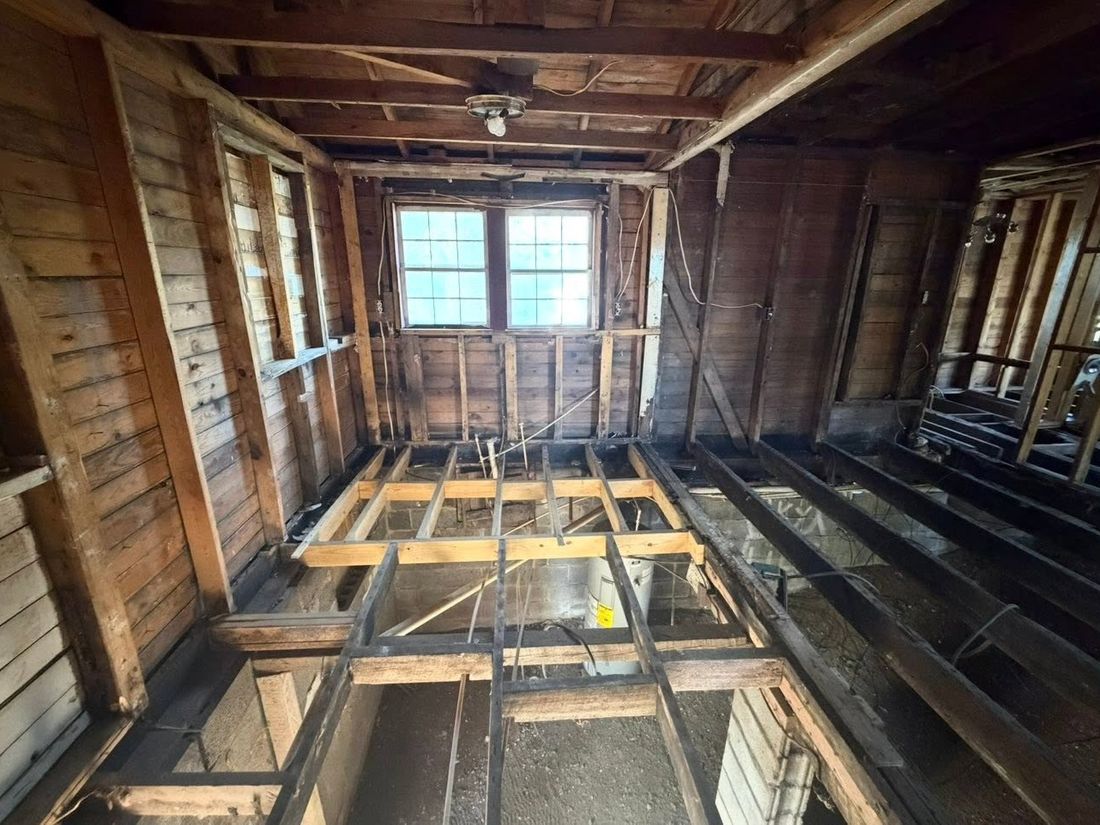
Padding, swollen drywall and soaked insulation removed in clean lines, contents moved and covered first.
Applied to affected surfaces before anything is closed back up.
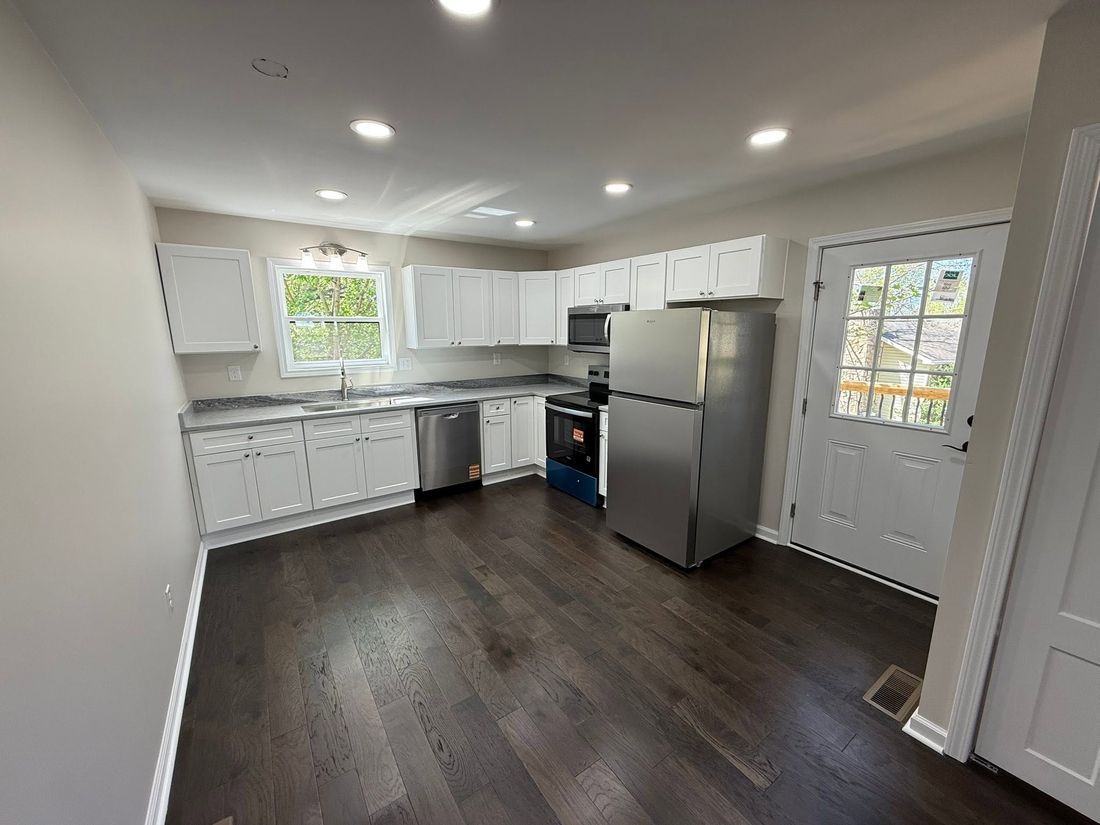
Drywall, texture, paint, flooring and trim put back by the same crew, on the same claim.
Gear sized to the room, not whatever was left on the truck. Undersized equipment is how a three-day dry-out turns into a two-week mold job.
On an insurance claim, emergency work starts with nothing down and we bill the carrier directly. You cover your deductible and anything you decide to upgrade while the wall is open. On a cash job we quote the whole thing up front, before any work starts.
If something we installed or repaired fails because of how we did it, we come back and fix it at no charge. Manufacturer warranties on materials pass through to you.
No change without a signed change order. If we open a wall and find more than anyone expected, you see the revised number and approve it before we keep going.
Equipment comes out on readings, not on a schedule that suits us. You get the daily logs, and on mold work an outside lab signs off before we rebuild.
Slab leak under a hallway in a single-story house. The homeowner noticed warm tile and a water bill twice the usual. We opened the slab area with the plumber, extracted, ran equipment for four days and rebuilt the hallway and two door casings. Insurance covered everything but the deductible.
Get your place looked at"We had a pipe burst in the middle of the night, flooding our downstairs. Ursa Pro was here in 40 minutes. They stopped the water, set up drying fans, and handled the insurance. They literally saved our home."
Sarah K. · Google reviewUsually not. Most drying runs in part of the house while you live in the rest. If the damage is wide or the power has to stay off, we tell you before we start.
A sudden failure — a pipe letting go, a supply line bursting, an appliance leak — is normally covered. Slow leaks that went on for months usually are not. We document either way so the carrier has what it needs.
Yes. They fix the pipe, we handle the water and everything it damaged. We coordinate so nobody waits on the other.
Hardwood can often be saved with mats that pull water out through the boards, if we get to it early. We tell you honestly when it is past saving.
We work with every major carrier and most regional ones. You pay your deductible, we invoice them for the covered work.
Carrier names are shown to indicate who we bill. We are not affiliated with or endorsed by these companies.
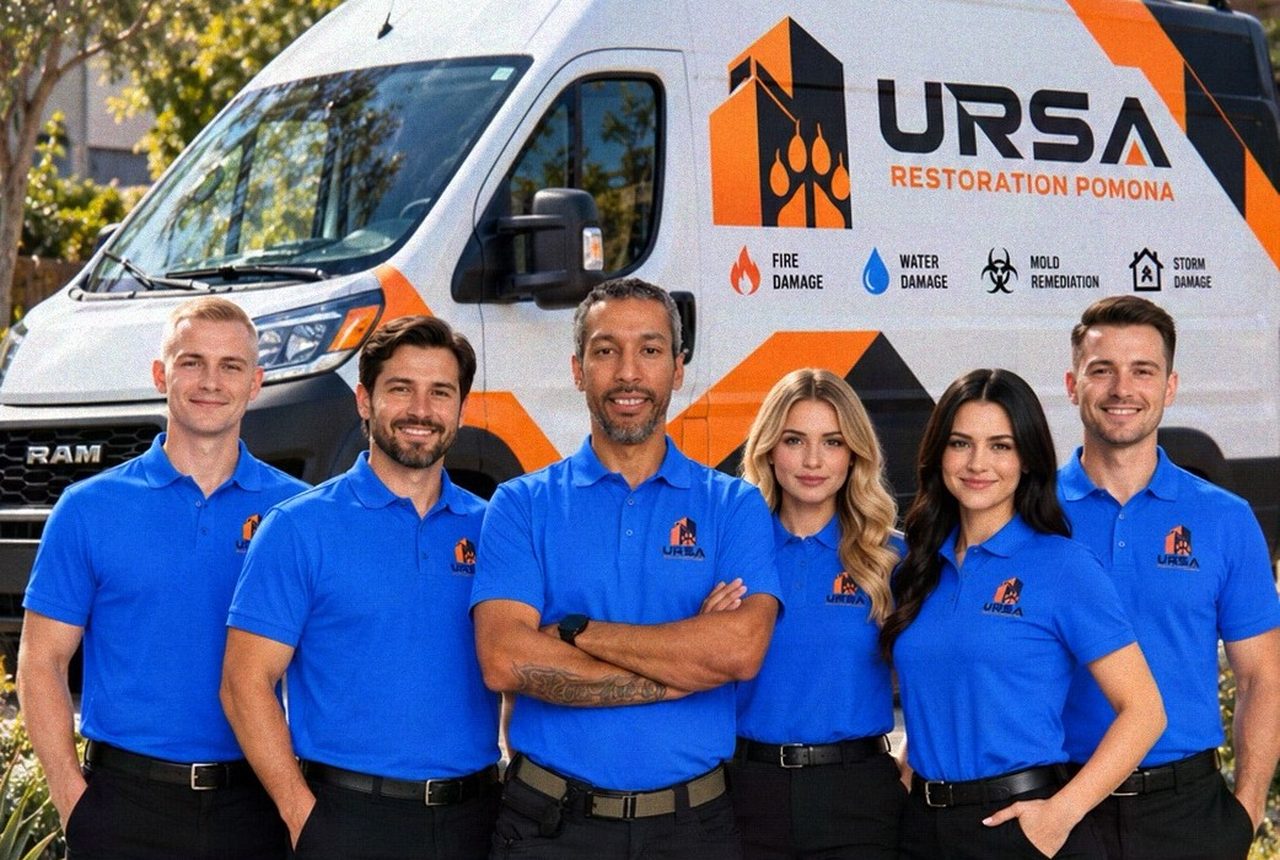
One crew from the first night through the final walkthrough, and one person who knows your job when you call. Marked vehicles, uniformed techs, IICRC certified.
Call (213) 817-5704We are a service-area business: crews dispatch from Claremont, minutes from the 210 and the 10, and come to your property. There is no walk-in office.
Someone answers day or night. Or just call (213) 817-5704.
The inspection is free, emergency work on an insurance claim needs nothing down, and someone picks up the phone at 3am.